

What Are the Top Toys 4-Year-Olds Love Most?
Understanding Tummy Time What is Tummy Time? Tummy time is a fundamental pr...

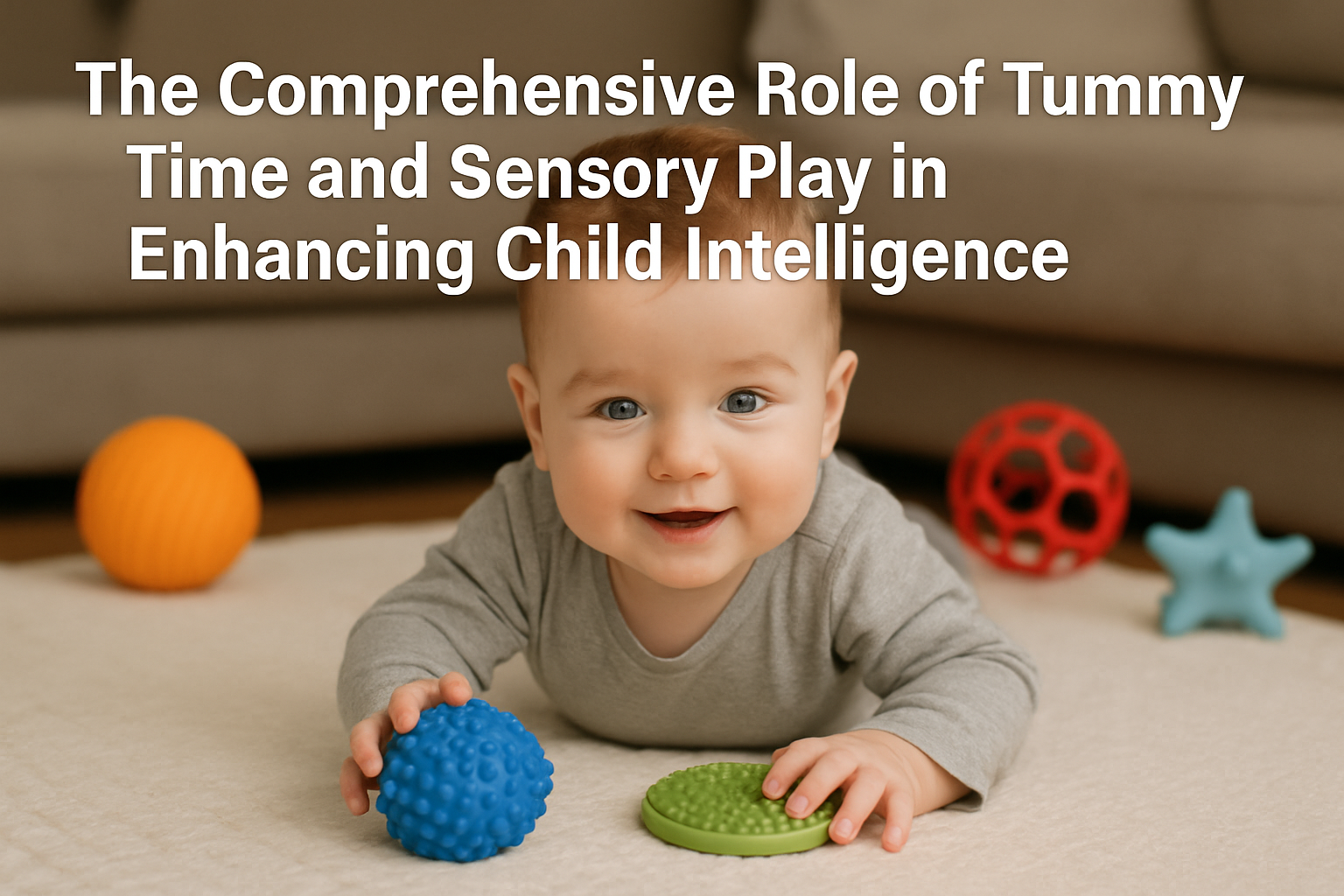

Tummy time is a fundamental practice involving placing infants on their stomachs while they are awake and fully supervised. This activity is essential for promoting healthy physical development. When babies engage in tummy time, they strengthen key muscle groups including the neck, shoulders, and arms. These muscles are crucial for developing the motor skills necessary for later milestones such as rolling over, sitting up, and crawling.
Parents and caregivers often wonder about the appropriate duration and frequency of tummy time sessions. It is generally recommended to begin tummy time as early as 12-24 days after birth, starting with short intervals of just 3-5 minutes. As the baby grows, these sessions can be gradually increased to about 15-30 minutes daily by the age of two months, and eventually reaching up to an hour a day by three months of age. This gradual increase helps ensure that babies become accustomed to the position and enjoy their time on their stomachs.
Age-appropriate practices for tummy time are vital for maximizing its benefits. For newborns and younger infants, it can involve gentle positioning during playtime, while older infants can benefit from engaging toys placed within reach to encourage them to lift their heads and push up. These adaptations not only enhance motor skills but also promote cognitive engagement as babies begin to explore their surroundings in this new position.
Engaging babies in tummy time helps facilitate their sensory and motor development, laying a strong foundation for further physical and cognitive milestones. When caregivers actively participate during tummy time by interacting with the infant, it enriches the experience, making it both a developmental exercise and a bonding opportunity. As they gain strength and confidence in this position, babies are likely to explore their environment more enthusiastically, fostering early learning experiences that contribute to their overall growth.
Tummy time is more than just a playful activity; it’s an essential part of an infant's early development. This practice encourages babies to spend time on their stomachs while awake, fostering numerous physical benefits. Among these benefits, the strengthening of muscles stands out. When infants engage in tummy time, they begin to develop crucial muscle groups, particularly in their neck, shoulders, and arms. These muscles are vital as they lay the foundation for further motor skills and independence in movement. By lifting their heads and pushing their bodies up, babies naturally engage their core muscles, which ultimately supports their ability to sit up, crawl, and eventually walk.
Moreover, this muscle development impacts a baby’s overall physical health and enhances their capacity for movement. For instance, when a child spends adequate time on their tummy, they can achieve developmental milestones more rapidly. The core strength developed during tummy time serves as a stable base for all future movements, making it easier for babies to transition from one physical activity to another as they grow. Therefore, tummy time is an integral practice for parents looking to support their child’s physical progression.
In addition to strengthening muscles, tummy time plays a critical role in enhancing motor skills. As infants lift their heads and engage with their environments, they begin to master fundamental movements such as rolling and pushing up. These early experiences are significant predictors of future crawling milestones. Studies have shown a clear comparison in developmental milestones between babies who regularly participate in tummy time and those who do not. Infants who have frequent tummy time sessions typically show greater proficiency in rolling over and crawling when compared to their counterparts. This early practice not only sets the stage for motor skill development but also fosters an exploration of their surroundings, providing them with valuable sensory experiences.
Another significant benefit of tummy time is the prevention of flat head syndrome, known medically as positional plagiocephaly. This condition arises when infants spend too much time lying on their backs, leading to potential flattening of the back of their heads. Excessive back lying can also hinder movement opportunities for the head and neck, which are essential for balanced muscle development. Tummy time offers babies the chance to move their heads freely and explore their environment, minimizing the risk associated with prolonged lying on their backs.
Overall, regular tummy time provides crucial movement opportunities that allow infants to develop not just physically, but also cognitively and socially. Engaging with their surroundings while on their tummies can enhance visual tracking abilities, stimulate brain development, and foster social interactions. Thus, tummy time is not just a beneficial practice; it is a fundamental aspect of an infant's growth journey.
Tummy time is an essential activity in an infant's early development, providing numerous cognitive and sensory benefits. It acts as a fundamental platform for exploring the world from various perspectives. As infants lie on their stomachs, they begin to view their surroundings differently, enhancing skills such as visual tracking and spatial awareness. This unique position encourages babies to lift their heads, which naturally piques their curiosity about the environment. The process of looking around while simultaneously managing their bodies helps to instill a sense of confidence and independence in their movements. As they push against the ground, they gain a clearer understanding of their spatial relation to objects, which reinforces their cognitive development.
Moreover, tummy time promotes a deepening of sensory experiences. Babies engage in tactile exploration as they feel different textures beneath them, such as soft blankets or harder surfaces. This variety stimulates their tactile senses and aids in developing a better understanding of their bodies in relation to these environments. The experience encourages babies to propagate sensory play, allowing them to explore sounds and sights simultaneously. Therefore, tummy time is not just about physical strength; it's equally about building the foundational blocks of perception that will aid their learning abilities in the long run.
Beyond the physical and sensory, tummy time fosters emotional intelligence and strengthens bonding between caregivers and infants. When parents engage with their babies during this activity, it creates a unique opportunity for connection. Many playful activities, like singing songs or making eye contact, can occur during tummy time, which enhances emotional bonds and enables babies to learn about social cues early on. This interaction not only nurtures trust but also lays the groundwork for developing social skills in the future. Regularly participating in tummy time with caregivers reinforces a secure attachment and encourages exploration, making infants more confident and socially aware.
Additionally, tummy time significantly contributes to cognitive development. The connection between tummy time and sensory play is profound; as babies engage their muscles and improve motor skills, they simultaneously enhance their sensory awareness. This interplay is pivotal in nurturing cognitive skills that influence learning and intelligence over time. As infants strengthen their neck, back, and shoulder muscles, they become more adept at navigating their environment. This physical development is directly linked to better cognitive functions, including memory, problem-solving, and language acquisition later in life. Therefore, the benefits of tummy time extend far beyond what meets the eye, offering a multifaceted approach to enhancing cognitive and sensory development in infants.
Sensory toys are designed specifically to stimulate a child's senses, supporting their sensory exploration and cognitive growth. These toys can take various forms, including tactile, visual, auditory, and olfactory inputs. By engaging children through different sensory experiences, these toys encourage them to explore their environments actively, fostering curiosity and creativity. Sensory play is often characterized by its open-ended nature, allowing children to discover new ways to interact with the world around them.
The importance of sensory toys cannot be overstated; they serve as tools for learning and development. As children manipulate and play with these toys, they explore concepts of cause and effect, enhance their fine motor skills, and develop critical thinking capabilities. Furthermore, sensory toys can assist children with specific developmental needs, helping them to process sensory information more efficiently. By promoting diverse sensory experiences, these toys play a vital role in empowering children to express themselves, ultimately contributing to their overall development.
Sensory toys encompass a wide array of options, from simple textures and colors to more complex interactive features. For instance, toys that incorporate different textures can help children learn about touch, while colorful toys with varying shapes stimulate visual processing. Additionally, auditory toys introduce sounds that help young minds make connections between noises and their sources. The versatility of these toys means that there is always an opportunity for children to find something that resonates with their interests, ensuring that sensory play remains engaging and effective.
Sensory toys significantly enhance cognitive development by fostering problem-solving skills through interactive play. When children engage with these toys, they often face challenges that require them to think critically and devise solutions. For example, toys with different input mechanisms can encourage experimentation, allowing children to see the results of their actions. This trial-and-error process is vital for developing reasoning skills and understanding various concepts, including spatial awareness and basic physics principles.
Additionally, sensory toys assist children in understanding cause-and-effect relationships. By experimenting with these toys, children quickly learn that their actions have consequences; for instance, pressing a button might produce a sound or light. Such experiences deepen their understanding of how different elements in their environment interact, laying the groundwork for more complex cognitive abilities. This understanding is foundational, contributing to academic success in later years as these children progress through their education.
Moreover, the interactive nature of sensory toys provides opportunities for open-ended learning, which is beneficial for cognitive growth. As children explore the diverse functionalities of various toys, they engage in imaginative play that fosters creativity. This type of play also encourages critical thinking, as children must assess their strategies and adjust their actions based on the feedback they receive from the toys. Therefore, sensory toys play an essential role in enhancing cognitive development by stimulating curiosity and enabling skill-building through play.
The role of sensory toys extends beyond cognitive benefits; they also contribute significantly to the development of social skills and emotional regulation. As children use these toys in group settings, they learn to communicate effectively with peers. Sharing sensory toys requires negotiation, patience, and teamwork—skills vital for successful social interactions. When children play together using these tools, they practice turn-taking and learn the importance of collaboration, which enhances their relationships with others.
Additionally, sensory toys can foster emotional regulation in children. Engaging with these toys provides a calm and focused environment, allowing children to explore their feelings safely. For example, certain toys can serve as coping mechanisms, helping children manage their emotions when faced with overwhelming situations. By practicing sensory play, children can learn to recognize their feelings and develop healthier responses, which is crucial for emotional well-being.
The aspect of sharing and cooperation facilitated by sensory toys also aids in building empathy among peers. As children navigate the dynamics of group play, they become more aware of their friends' needs and emotions, fostering a sense of community. This understanding encourages them to support one another, enhancing their emotional intelligence. Thus, sensory toys play a significant role in shaping social skills and emotional regulation, equipping children with the tools they need for successful interpersonal interactions.
Sensory toys are instrumental in enhancing a child's memory and focus. Engaging activities that involve sensory stimulation often require children to concentrate, which, over time, strengthens their attention spans. For instance, sensory toys that require manipulation or problem-solving demand sustained engagement, allowing children to practice focusing on tasks. This practice is invaluable, especially as they transition to more structured learning environments where attentiveness is crucial.
Furthermore, these toys support memory development through repetitive and engaging play. Children can recall events, actions, and sequences while playing with sensory toys, which reinforces their memory retention. The interactive nature of sensory play can help children associate specific sensory inputs with emotions or events, thus aiding in the formation of long-term memories. This connection between sensory experiences and memory is essential for academic learning, as children use past experiences to relate to new information.
As children play with sensory toys, they also engage in critical thinking, further enhancing cognitive function. By exploring and interacting with these toys, they learn to make connections and devise solutions, which supports their intellectual growth. Such activities can stimulate various regions of the brain associated with learning and memory, ultimately leading to a more robust cognitive framework. In this way, sensory toys not only entertain but also serve as essential tools for fostering enduring memory and heightened focus in children's developmental journeys.
Starting tummy time sessions as early as 12-24 days after birth is essential for infant development. Incorporating tummy time into a baby's routine can make this practice more engaging and beneficial for their growth. Initially, sessions can be short, lasting just a few minutes, and gradually increasing duration as the baby becomes more accustomed to this position. Parents can integrate tummy time during diaper changes or lay their baby on a blanket, allowing them to enjoy this time while surrounded by familiar sights and sounds.
To maximize the effectiveness of tummy time, it's also helpful to create a stimulating environment. Surrounding the baby with colorful toys or using a mirror can catch their attention and encourage them to lift their heads and engage in active movement. Parents should also be mindful that always doing tummy time on a flat surface can become monotonous; thus, alternating locations like the floor, a tummy time pillow, or on their lap can add variety. Exploring different textures and shapes will not only enhance their tummy time experience but also boost their curiosity during these formative months.
When it comes to sensory toys, it’s important for parents to actively engage in the introduction of these items to facilitate exploration. Observing the child's sensory preferences can guide parents in selecting toys that resonate with their baby. Whether it's toys that crinkle, rattle, or have different textures, ensuring a diverse array can enrich the sensory experience. Additionally, creating a sensory-friendly environment means ensuring that the space is safe and conducive to exploration. Soft lighting, varying textures, and notable soundscapes can all enhance this safe zone, allowing the baby to interact freely and confidently with the sensory toys available to them.
Combining tummy time with sensory play can significantly enhance a child's development. Sensory toys can motivate babies to reach, grasp, and even push themselves up during tummy time, thereby promoting essential motor skills along with cognitive growth. This fusion of activities encourages babies not only to explore their physical capabilities but also to engage in problem-solving as they interact with different textures and stimuli. Engaging them in this manner can foster delight and excitement, ultimately creating a positive association with both tummy time and sensory exploration.
Furthermore, the shared exploration between parent and child during these activities can create emotional connections that are just as important as physical development. Parents can join in on the sensory play by mimicking sounds or reacting to the baby's movements, further strengthening the bond through shared experiences. This interaction also helps babies develop their social skills early on by learning through observation and imitation. Thus, successfully combining tummy time with sensory play can lay the foundation for a well-rounded, emotionally supported development during those critical early months.
Interactive play is a vital aspect of childhood development, particularly when it comes to enhancing cognitive skills. Engaging in activities that require children to think critically and solve problems fosters a mindset geared for innovation and analysis. During interactive play, children encounter challenges that require them to formulate strategies, make predictions, and draw conclusions. These experiences provide a significant boost to critical thinking, as children learn to assess situations from multiple angles and develop solutions based on their observations and interactions. For instance, games that involve building or constructing encourage children to think spatially, while cooperative role-playing can enhance their understanding of complex social dynamics.
Moreover, sensory play has been shown to result in considerable benefits concerning intelligence development. Sensorial engagement allows children to explore their environment through touch, sound, and movement, paving the way for deeper cognitive connections. Activities such as playing with sand, water, or various textures not only stimulate the senses but also promote neural connections that are essential for brain development. When children experiment with their surroundings, they practice problem-solving and critical thinking in an informal and natural context, which ultimately leads to cognitive enhancements that are foundational for academic success.
In summary, interactive play serves as a dynamic platform where children can refine their cognitive skills. It reinforces the link between play and intelligence, as it encourages the development of essential skills such as critical thinking and problem-solving. By allowing children to experiment, collaborate, and innovate through play, caregivers and educators can significantly contribute to their cognitive growth.
Research has consistently highlighted the strong correlation between play, brain development, and intelligence. Various studies indicate that children who engage in regular play experiences exhibit advanced cognitive skills compared to their peers who have less playtime. These findings suggest that play is not just a leisure activity, but an integral part of cognitive development. For example, unstructured play, which involves free, self-directed activities, has shown a remarkable impact on promoting creativity and logical reasoning among children. This type of play allows children to explore, take risks, and learn from trial and error, essentially laying the groundwork for intellectual growth and problem-solving abilities.
Additionally, the role of unstructured play in fostering cognitive flexibility cannot be overstated. This flexibility is crucial as children encounter new situations requiring quick thinking and adaptability. Unstructured play often involves unpredictable and changing circumstances that force children to think on their feet and develop strategies for overcoming unexpected challenges. As they engage in these experiences, they learn not only to navigate uncertainties but also to appreciate the value of collaboration and social interaction.
Through these mechanisms, play acts as a foundation for overall cognitive development. The synthesis of various scientific studies strongly supports the assertion that incorporating play into children's daily routines is essential for optimal brain development. Prioritizing play during formative years equips children with cognitive tools that facilitate learning and intelligence, underlining the significance of play as a developmental necessity rather than simply a source of entertainment.
The benefits of tummy time and sensory play are multi-faceted, each contributing uniquely to a child's developmental journey. Tummy time encourages infants to engage their muscles, promoting strength and coordination as they learn to lift their heads and eventually crawl. This physical activity boosts not just motor skills but also cognitive functions, laying the groundwork for future intellectual growth. Sensory play, on the other hand, stimulates curiosity and creativity, allowing children to explore their environment through hands-on experiences. Both activities work together harmoniously to support a child’s intelligence by fostering an active, engaging, and explorative approach to learning.
An integrated approach to tummy time and sensory play establishes a foundational framework for lifelong learning. As children interact with their surroundings, they develop problem-solving skills and critical thinking through exploration. These foundational experiences are vital as they transition into more structured forms of learning. The ability to manipulate objects, understand spatial relationships, and experiment with different textures broadens their perspectives and cognitive capabilities. Additionally, engaging in these activities can enhance social interactions when done in group settings, promoting collaboration and communication skills that are essential in both academic and social environments.
Ultimately, the relationship between physical experiences like tummy time and cognitive development through sensory play cannot be overstated. As children engage with both modalities, they are not just developing their bodies, but also enriching their minds. This integrated approach nurtures a balanced development that prepares them for future challenges, setting the stage for a holistic educational experience. Parents and caregivers who prioritize these activities are investing in their child's potential—building the skills necessary for success in school and beyond. By weaving together physical and cognitive exercises, children can thrive in an increasingly complex world, becoming not only knowledgeable but also adaptable and resilient learners.


Understanding Tummy Time What is Tummy Time? Tummy time is a fundamental pr...

Understanding Tummy Time What is Tummy Time? Tummy time is a fundamental pr...