

What Toys Are 4 and 5-Year-Olds Choosing to Play With Most?
Importance of Toys in Development Toys are not just entertaining objects; th...

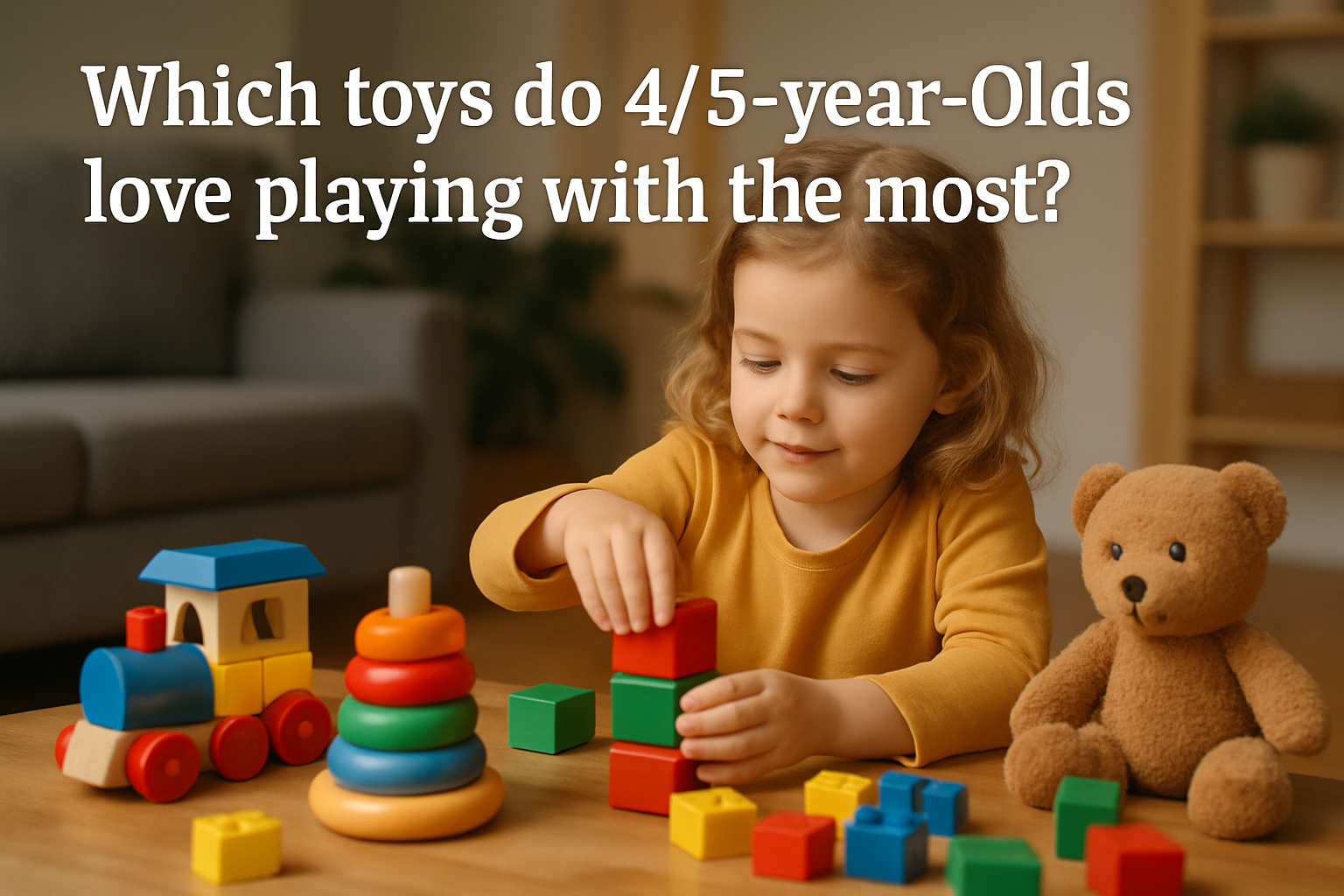

Toys are not just entertaining objects; they play a vital role in the healthy development of children, particularly during the formative years of ages four to five. At this stage, children are naturally curious and eager to explore their surroundings, and toys provide the perfect medium for this exploration. Engaging with different types of toys enables children to develop essential skills across cognitive, social, emotional, and physical domains. From imaginative play to fine motor skill enhancement, the right toys can support a child’s overall growth trajectory.
Among the various categories of toys popular among children today, imaginative play items take center stage. These toys, which include dress-up costumes, action figures, and playsets, help children act out different scenarios, fostering creativity and storytelling. Additionally, educational toys that combine fun with learning are highly sought after. They encourage curiosity and problem-solving skills, often featuring activities that promote cognitive engagement. Furthermore, tactile toys, such as building blocks and craft materials, enhance fine motor skills and artistic expression, encouraging children to create and experiment using their hands.
The impact of play, facilitated by toys, extends beyond mere entertainment. Research has consistently shown that play is fundamental to developing cognitive skills. For instance, engaging in puzzles helps sharpen problem-solving abilities, while cooperative games promote social skills such as negotiation and teamwork. Through play, children also explore their emotions, learning to express themselves and understand the feelings of others. Thus, the type of toys children interact with significantly influences their developmental pathway, shaping them into well-rounded individuals equipped to navigate various life challenges.
In 2026, toy collections designed for young children showcase vibrant themes that encapsulate imaginative play and educational activities. Particularly for children aged 4 to 5, these collections emphasize engaging opportunities that stimulate creativity while promoting essential skills through interactive play. Collections include a variety of items—like building sets, art supplies, and multi-purpose playsets—that cater to the innate curiosity of this age group. By integrating elements of storytelling and scenario-based play, these toys create environments where children can role-play and explore different scenarios, thus enriching their imaginative horizons.
Furthermore, toys in these collections are tailored to challenge and develop the cognitive abilities of four-year-olds. They are thoughtfully designed to encourage problem-solving and critical thinking through fun, engaging scenarios. For example, puzzles that require children to recognize patterns or sequences boost their logical reasoning. Meanwhile, arts and crafts kits enable self-expression and dexterity, allowing little ones to create and innovate. Such experiences not only nurture imagination but also instill a sense of accomplishment as children see their ideas come to life.
This year, diverse toy collections have increasingly focused on promoting STEM (science, technology, engineering, and mathematics) concepts. Building kits and robotic toys encourage exploration and hands-on learning, making complex concepts more accessible. These toys ignite curiosity and inspire future learning pathways, fostering a deeper understanding of the world around them while ensuring that play remains at the forefront of the learning process.
The realm of toys has evolved significantly, thanks to a heightened emphasis on creating items that encourage imaginative play and promote skill development. In 2026, many toys are designed to be as educational as they are entertaining, offering children opportunities to immerse themselves in interactive and developmental experiences. For instance, pretend play sets allow children to emulate real-world roles, stimulating their creativity while fostering important life skills such as communication and cooperation. Such toys help children articulate their thoughts and feelings, allowing for better social interaction with peers.
Moreover, toys that cater to gross motor skills have gained traction in the market. Items like balance beams and climbing structures not only keep children physically active but also instill a sense of confidence as they navigate challenges. Safer alternatives to outdoor play equipment have emerged, offering children the chance to develop coordination and strength in a secure environment. This combination of physical activity and imaginative play encourages a holistic approach to development during these formative years.
As parents increasingly recognize the value of play in education, the demand for diverse and engaging toys has soared. The latest trends indicate a preference for toys that combine learning with enjoyment, ensuring that children grasp essential concepts while having fun. Overall, the focus remains on creating memorable experiences that promote lifelong skills through imaginative engagement. In 2026, the best toys continue to blend adventure with education, providing children an enriching playground of possibilities to discover themselves and the world around them.
Engaging toys are designed to spark creativity and encourage imaginative play in children. These toys often provide an open-ended experience, allowing children to explore different scenarios and roles. By engaging in pretend play, children can cultivate their storytelling abilities and enhance their verbal skills. Imaginative play also helps to develop problem-solving skills as children navigate various situations within their creative narratives. For instance, toys that mimic real-life activities or allow for role-playing can lead to deeper emotional understanding and social skills as children learn to empathize with characters they create.
Moreover, interactive learning is a core characteristic of engaging toys. These toys not only capture a child's attention but also promote active participation in the learning process. As children interact with these toys, they are more likely to ask questions and seek answers, contributing to cognitive development. For example, toys that require manipulation or response can evolve a child's thought process and enhance motor skills. This type of interactive learning fosters a child’s curiosity and encourages them to explore various concepts through hands-on experiences, further solidifying their understanding.
In conclusion, toys that encourage imaginative play and interaction are vital for early childhood development. They not only serve as a source of entertainment but also play a significant role in nurturing creativity, enhancing social interactions, and building critical thinking skills. As children engage with their toys, they are not merely playing; they are laying the foundation for essential life skills that will benefit them in the long run.
The educational value of engaging toys cannot be overstated. Toys specifically designed for cognitive stimulation can greatly enhance a child's learning experience. For example, toys that incorporate symbols and patterns can strengthen numeracy and literacy skills. These toys often challenge children to think critically and creatively. By providing a stimulating environment, these toys encourage exploration and discovery, which are critical drivers of intellectual growth in early childhood.
Toys such as building blocks and puzzles offer significant educational benefits. Building blocks promote spatial awareness and encourage mathematical thinking, allowing children to visualize and create structures while understanding basic engineering principles. Puzzles, on the other hand, enhance problem-solving skills and improve memory. As children work to fit pieces together, they learn to recognize patterns and develop perseverance as they strive to complete more challenging puzzles.
Furthermore, the hands-on nature of these educational toys makes them effective tools for learning and engagement. They allow children to experiment and test their ideas, fostering a sense of accomplishment once they succeed. This combination of challenge, interaction, and reward creates an enriching experience that goes beyond traditional learning. As a result, engaging toys not only entertain but also lay a solid foundation for lifelong learning, making them indispensable to a child's early development journey.
Current toy trends for preschoolers focus on sensory play items and sports-related toys. Sensory play encourages exploration through touch, sight, and sound, making it an essential aspect of preschool development. Popular toys in this category may include items that allow children to manipulate various textures or create sound. For instance, toys that involve sand, water, or various building materials provide tactile experiences that are beneficial for a child's sensory development. Typically, items that encourage sorting, stacking, or combining different components not only stimulate creativity but also enhance fine motor skills.
In addition to sensory play, sports-related toys are gaining traction among preschoolers. These toys often include items that promote physical activity and teamwork. Children can engage in various sports through equipment like lightweight balls, frisbees, or beginner’s sports gear designed specifically for their age group. Such toys not only improve physical health but also promote social skills as children learn to cooperate with peers during play. Engaging in these sports also helps develop motor skills, coordination, and confidence in young children, which are critical at this stage of their development.
Outdoor play equipment is another sector trending in the world of preschool toys. Items designed for outdoor activity invite children to interact with their environments while promoting physical processes essential for development. Equipment such as small slides, climbing structures, and swings can host social interactions while offering fun and exercise. The emphasis on safety in designs assures parents that their children can enjoy these activities without risk. Engaging in outdoor play allows preschoolers to channel their boundless energy in a constructive way, providing benefits that extend into their growth and learning. Furthermore, outdoor toys significantly encourage imaginative play as children create scenarios and roles, enriching their cognitive development. Thus, the current trends reflect an evolving understanding of preschool needs, focusing on play that enhances growth in various domains.
Play is not just an activity; it's a fundamental aspect of childhood that significantly enhances development. Engaging in diverse forms of play supports holistic brain function and fosters the growth of cognitive skills. When children participate in imaginative play, problem-solving games, or even structured activities, they stimulate various areas of their brain. This engagement leads to improved memory, attention, and reasoning abilities. For instance, activities that involve creative thinking—such as building with blocks or storytelling—encourage children to think critically and develop spatial awareness. Research shows that hands-on experiences, like art or science experiments, not only captivate young minds but also help cement knowledge in ways that traditional learning methods often fail to achieve.
Moreover, creative hands-on activities facilitate deeper processing and understanding of concepts. When children are allowed to explore materials and ideas freely, they become active learners. This form of exploration encourages them to ask questions, make predictions, and test out their ideas. For example, when children engage in role-play, they may take on various characters and scenarios, allowing them to not only express their feelings but also comprehend and analyze social situations. Such cognitive engagement during playtime leads to the formation of neural connections that are foundational for future learning. Consequently, fostering play in early childhood builds not just the capacity to learn but the desire to learn as well.
Social skills are another significant benefit derived from playful interactions. Through play, children learn vital negotiation and cooperation skills. When they engage in teamwork during games or shared projects, they must navigate differences in opinion, strategize together, and find common ground to succeed. These interactions not only enhance their communication skills but also teach them the nuances of empathy and understanding others' perspectives. Furthermore, play creates a space where relationships with peers and caregivers can flourish. Interactive play provides opportunities for children to bond, build trust, and develop a sense of belonging. Such social connections are essential for emotional well-being and create lasting impacts on children's interpersonal skills.
Transitioning further, play serves as a powerful conduit for emotional mastery and language development as well. Engaging in imaginative play allows children to explore and express their emotions in a safe environment. They learn to articulate feelings and make decisions as they navigate different scenarios, contributing to their emotional intelligence. This process is vital for developing resilience and coping strategies, as children experiment with various roles and situations. Moreover, through these playful interactions, they enhance their vocabulary and language skills. Engaging in dialogues during play fosters a rich language environment where children pick up new words, phrases, and contextual understanding of language.
Overall, play is essential not just for entertainment but for the comprehensive development of children. It intertwines cognitive growth, social skill acquisition, and emotional intelligence, laying a strong foundation for lifelong learning and interpersonal relationships.
Selecting toys for young children requires careful consideration of safety and developmental suitability. It's essential to choose toys that meet safety standards set by regulatory bodies to ensure they are free from hazardous components or choking risks. This means selecting toys that are non-toxic, sturdy enough to withstand rough play, and have no small parts that could be ingested. Parents and caregivers should always look for clear labeling that indicates the toy's safety compliance with established guidelines, which can vary by region. Furthermore, it’s beneficial to choose toys with soft edges and materials that prevent injuries during playful exploration.
Additionally, the developmental appropriateness of toys is vital in fostering engagement. At ages four to five, children are rapidly developing their motor skills, cognitive abilities, and social interactions. Toys that are too complex may lead to frustration, while toys that are too simplistic may not hold their interest. Ideal toys should challenge their budding abilities without overwhelming them. Incorporating elements like puzzles, building blocks, and art supplies can support their creativity and problem-solving skills while providing a hands-on learning experience. Ensuring that these toys cater to a child's developmental stage helps them progress while ensuring fun.
Beyond safety and development, it's also important to consider sensory elements that enhance play. Toys with various textures, colors, and sounds can stimulate sensory exploration, which is crucial at this stage of growth. Engaging a child's senses not only makes playtime enjoyable but also promotes cognitive development, as children learn to differentiate and categorize their experiences. Therefore, opting for toys that ignite curiosity and provide safe avenues for exploration should be the primary focus for caregivers when choosing toys for this age group.
Based on the developmental milestones observed in children aged four to five, certain types of toys stand out as being particularly beneficial. Toys that encourage open-ended play are highly recommended, as they foster creativity while allowing children to freely express themselves. Art supplies—such as crayons, clay, and paints—can encourage imaginative play and enhance fine motor skills. Moreover, construction sets that involve building and assembling can develop spatial awareness and logical reasoning, providing ample room for problem-solving exercises.
Another category of toys that deserves attention includes cooperative games and toys that require teamwork. Engaging children in social play helps develop crucial social skills like sharing, turn-taking, and collaboration. Toys that can be enjoyed with peers, siblings, or family members not only enhance interpersonal relationships but also encourage children to articulate their thoughts and emotions. Group activities promote effective communication, which is a key developmental goal at this stage.
Lastly, technology-related toys that introduce programming concepts can be excellent choices for forward-thinking parents. Toys that involve interactive learning through coding games or apps can intrigue children and prepare them for future learning opportunities. These toys typically blend entertainment with educational content, which is an effective way to maintain a child's interest while ensuring that they grasp fundamental concepts. Therefore, it is advantageous for caregivers to explore a diverse range of options that cater to creativity, social skills, and cognitive development in children between four and five years old.
Favorite play activities for children encompass a wide range of imaginative and engaging experiences, significantly contributing to their development. Dramatic play, for instance, allows children to role-play and explore various scenarios. This type of play is crucial as it encourages creativity and helps children understand the world around them. As they take on different roles—be it a firefighter, doctor, or chef—they learn about social interactions, empathy, and problem-solving skills.
Complementing dramatic play, sensory exploration remains a favorite among young children. Activities that stimulate the senses—like playing with sand, water, or various textures—allow children to discover and learn through direct experience. Sensory play also aids in fine motor development, as children manipulate objects and materials. Incorporating tools like textured balls or molds can enhance sensory exploration, encouraging children to experiment and engage with their environment in novel ways.
Outdoor activities are another popular category, fostering physical fitness and social skills through play. Children derive great joy from running, climbing, and exploring. Outdoor settings provide dynamic environments that inspire adventure and teamwork. Simple items such as jump ropes, balls, or frisbees encourage active participation, allowing kids to develop coordination and physical strength. Exploring nature further instills a sense of curiosity and respect for the environment, making outdoor play invaluable for holistic child development.
Finding toys that stimulate learning and creativity doesn't have to break the bank. Affordable and engaging toys can effectively promote cognitive and physical development in children. Focus on options that are durable and made from safe materials; these toys foster imagination and skill-building without sacrificing quality. Simple puzzles, building blocks, and arts and crafts supplies typify budget-friendly options that facilitate a myriad of play scenarios. Such toys not only enhance problem-solving skills and dexterity but also encourage social interaction, especially when children play together.
In addition to ready-made toys, the creativity can extend to DIY projects using household items. An empty cardboard box, for example, can transform into a castle or a spaceship with just a bit of imagination. Similarly, old clothing can be repurposed for dress-up shows, which enhance imaginative play and storytelling skills. Household items such as paper plates, egg cartons, and plastic containers can serve as the basis for crafting projects, turning a simple idea into an engaging activity that keeps kids entertained for hours. These DIY options are budget-friendly by nature and help cultivate resourcefulness in children.
Moreover, the advantages of these budget-friendly toys extend beyond immediate play. They often encourage collaborative playtime and problem-solving discussions among children, enhancing social skills and communication. By incorporating affordable toys into daily life, parents can create enriching play experiences without the stress of overspending. These simple yet effective materials can lead to unexpected outcomes and innovations in play, showing that sometimes the best toys are the ones that allow children to dream up their adventures through imaginative and interactive play. Thus, fostering creativity at a low cost can lead to long-lasting benefits in a child's development.
Choosing the right toys for children is more than just a matter of entertainment; it plays a vital role in their overall development and engagement. Toys serve as tools that foster creativity, cognitive skills, and emotional resilience. When parents select toys that enhance these aspects, they provide their children with opportunities to learn through play. Open-ended toys and interactive items stimulate critical thinking and problem-solving skills, allowing children to explore and express their ideas in a safe environment. This process of discovery is fundamental, as it encourages children to ask questions and seek solutions, which are essential skills for lifelong learning.
Furthermore, parents are encouraged to think broadly about the options available when selecting toys. A diverse range of toys not only caters to differing interests but also nurtures various developmental areas. For instance, physical toys can enhance motor skills, while puzzles improve logical reasoning. Safety should always be a priority, ensuring that none of the selected toys contain harmful materials or small parts that pose choking hazards. Engaging with toys made from safe, sustainable materials can provide an added layer of assurance for parents, knowing their child is playing with items that are good for them and the environment.
Finally, it's important for parents to create an environment where play is cherished and encouraged. By doing so, they can cultivate a space where their children feel free to imagine, explore, and interact with diverse toys that facilitate their development. Encouraging children to choose their own toys also fosters a sense of autonomy. This process not only engages them more deeply but can develop a stronger bond between parents and their children as they navigate the world of play together. Ultimately, the choices made during these formative years can have lasting implications on children's growth, setting them on a path of curiosity and creativity that extends far beyond playtime.


Importance of Toys in Development Toys are not just entertaining objects; th...

Importance of Toys in Development Toys are not just entertaining objects; th...